What Leaven Does
There are two ways into this. Here we set the old argument aside and simply watchIn plain English, to observe means to see attentively — to give careful, focused attention to something. This is precisely what the Hebrew shamar points at: watchful, protective attention toward something valued. In religious usage, "observe" has been reduced to performing an external requirement. Synonyms: shamar, keep, watch, guard. More what leavenIn the biblical symbol-system, leaven is amoral — neither good nor evil in itself. It represents doctrine, teaching, knowledge, influence: the system that permeates whatever it enters and transforms it from within. The type of leaven matters; "the leaven of the Pharisees" is their doctrine, not leaven as a category. Synonyms: yeast, leavening. See Does Leaven Really Mean Sin? More does. If you’d rather take the question up head-on — doesn’t leaven mean sin? — start with Does Leaven Really Mean Sin?. Same ground, two doors.
Invite someone to dinner, promise them bread, and set down a plate of crackers — and watch their face. Something is off, and both of you know it. Bread and crackers are made of nearly the same stuff, but they are not the same thing, and no one has to be told the difference. You can see it, and you can taste it.
The people who first wrote the Gospels knew that difference too, and their language kept two words for it. There was artosGreek for bread in the generic sense — a loaf, leavened or unleavened alike. At Emmaus, Luke chose this open word for the bread the risen Christ broke (Luke 24:30), during the very week of Unleavened Bread, rather than the precise azymos he knew — but because artos names a loaf without telling its kind, it raises the question without settling it. Synonyms: loaf, bread. See also: Azymos See What Is A New Lump? — A Demonstration More, the ordinary leaven-risen loaf a household ate every day, and there was azymosGreek for unleavened bread specifically — the marked word where artos is the open one. It is the Septuagint's term for the bread of the Days of Unleavened Bread, and Luke knew it and used it elsewhere (Luke 22:1; Acts 12:3) — which is what makes his reaching for artos at Emmaus worth noticing. Synonyms: azyma, unleavened, unleavened bread. See also: Artos See What Is A New Lump? — A Demonstration More, the flat, crunchy unleavened bread of one weekThe cycles of day, month, and year we observe in the heavens — the earth's rotation, the moon's orbit, the earth's circuit around the sun. The week has no such anchor in the sky, yet we are instructed to observe it too — a complete cycle of seven culminating in the seventh, the same shape that surfaces everywhere in Scripture. Synonyms: shavua, cycle of seven. See also: Sabbatical year. See Where Does the Week Come From? More a year. Two distinct words, because they were two different things.
Which makes a seemingly small thing in Matthew worth slowing down for. Telling of Jesus’ last night, Matthew names the season plainly, with a very specific word — “the first day of Unleavened Bread” (Matthew 26:17), azymos, for the very week leaven is put out of the house. Then, a few verses on, when Jesus takes the loaf and breaks it, the word Matthew reaches for is not azymos. It is artos (Matthew 26:26) — the everyday word for leavened bread.
Now, this can be argued. Artos can be used as a general word; it can cover a loaf of any kind, and someone will say it simply means the unleavened bread that happened to be on the table. Fair enough — I am not going to try to close that here. The exact word for unleavened was sitting right there on the same page, and the writer stepped past it. Whoever is sure the loaf was unleavened is the one now owing an explanation.
Set it on the back burner
So let’s set the artos question aside for a bit. It is an old question — whether the bread should be leavened or unleavened was one of the very disputes that split the Greek East from the Latin West a thousand years ago — and it does not have to be settled here. We can just put it on the back burner; we can pull it forward any time.
We set it aside for a reason. The fight over the word has a way of keepingFrom the Hebrew shamar — to watch over, guard, protect, give attentive care to. A shepherd shamar the flock. The keeping the feasts and sabbath requires is the attentive, protective engagement that creates the conditions for seeing what they reveal — not external compliance with a schedule. Synonyms: shamar, observe, guard, watch over. More us from the thing the word points at. And there is a habit most of us share, mine as much as anyone’s: we want the text to say it, flatly, in a sentence we can underline. Hold that habit loosely for a few minutes. Instead of asking what leaven is, let’s watch what it does.
Watch the “invisible” words
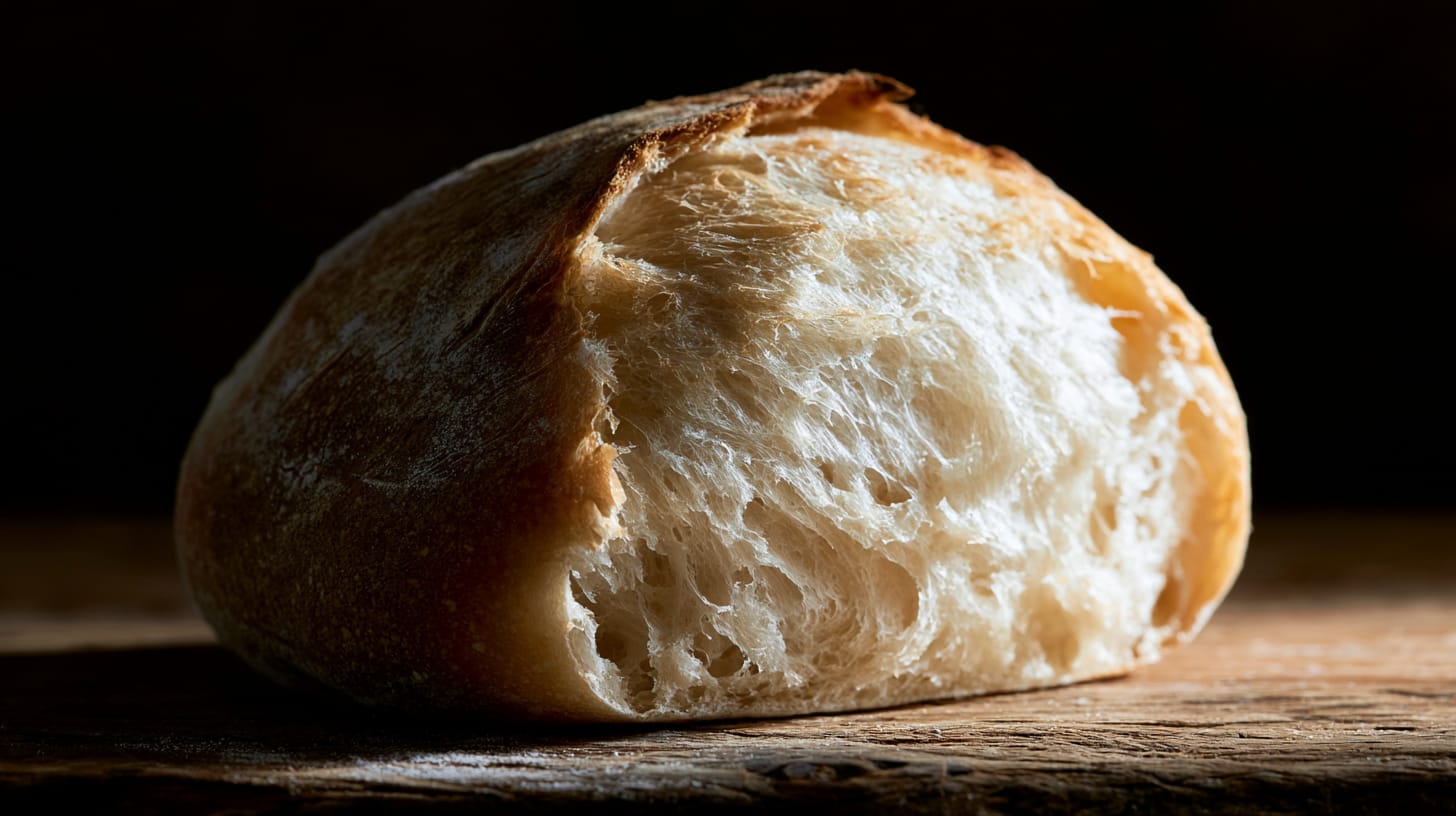
Start with the loaf itself. When the Bible says leaven, it does not mean a packet of dry yeast off a shelf — that is a modern thing. It means sourdoughWhen Scripture says "leaven," it means sourdough — a living culture of wild yeast and bacteria kept as a "mother" lump, not the packet yeast of modern baking. It works by permeating the whole batch and turning it to its own character — which is why leaven pictures an influence rather than a mere additive, and why Jesus' warning about the leaven of the Pharisees is glossed as "the teaching" (Matthew 16:12). See What Is Sourdough Bread? More: a living culture, wild, caught from the air and the grain, kept alive by hand and passed from house to house. Fold a little of it into a fresh batch and it works through the whole lump and raises it to its own character. Leave it long enough and there is no separating the two.
Now watch the warnings, and watch the unnoticed words the eye slides right past. The “leaven of the Pharisees” (Luke 12:1). The “leaven of Herod” (Mark 8:15). The “old leaven,” the leaven “of malice and evil” (1 Corinthians 5:8). Every time, the danger is fastened to a particular leaven — never to leaven itself.
And once, Jesus takes the guessing away. The disciples think he is worried about literal bread, and he stops them; and Matthew tells us what they finally understood — that he was not speaking of bread at all, “but of the teachingFrom the Hebrew Torah — instruction, direction — rooted in yarah, to aim as an archer toward a target. Never primarily legislative. The stone tablets were hidden inside the ark, inside the most holy place, mediated by a priest. The promise was always to move that instruction from stone to flesh — from concealment behind a veil to working from within the person. Synonyms: Torah, nomos, instruction, teaching, commandment, mitzvah. More of the Pharisees and Sadducees” (Matthew 16:12). Their teaching. A body of knowledge, a perspective, a framing that had worked its way through them and made them its own.
Then watch the leaven that plainly belongs. “The kingdom of heavenJesus said it plainly: entos hymōn — within you (Luke 17:21). Entos means inside — it's the "inside of the cup" in Matthew 23:26; "among you" is the softer rendering. The kingdom is not something to watch for out there, pointed to "here" or "there" — it is already within. Synonyms: kingdom of heaven, kingdom of Christ, basileia. More is like leaven” (Matthew 13:33). The peace offering of thanksgiving, brought with “loaves of leavened bread” (Leviticus 7:13). The firstfruitsFirstfruits (Greek aparchē; Hebrew bikkurim) — the first and best of a harvest, brought to God ahead of the rest and set apart as His. Scripture layers it: Christ is the wave sheaf, "the firstfruits of those who have fallen asleep" (1 Cor 15:20-23); the ekklesia are in turn called firstfruits (James 1:18) — an early portion themselves, ahead of a far larger harvest still to come. See also: Wave sheaf See Why Pentecost Has No Fixed Date More at the close of the feastIn Scripture a feast — Hebrew chag — is a designated period, not a single day but a span with its own structure and sequence. The Feast of Weeks spans seven weeks; the Feast of Tabernacles, seven days. A feast may contain one or more annual holy days, but the feast itself is the full period, not any single day within it. A feast is not the same as a holy day (a sabbath), though the two connect and can coincide — the Feast of Trumpets is itself a holy day, and Atonement is both a feast and a holy day. Synonyms: festival, appointed time, moed. More weeks later — two loaves, “baked with leaven,” carried to God and received (Leviticus 23:17). Leaven offered, and welcomed by God.
Set those beside the warnings and the thing quietly shows itself. Leaven is not the villain, and it is not the hero. It is a teaching — a way of seeing, an influence — that spreads through whoever holds it and turns to its own character. Which is why the one picture can hold both the hypocrisyFrom the Greek hypokritēs — a stage actor performing behind a mask; its parts (hypo, under + krinō, judge) also suggest one who judges from a concealed position, motives hidden even from himself. In Jesus' mouth (Matthew 23:27-28) both seem at work: religion performed for an audience, and a self that judges others while never coming under the same view. See Mask and Verdict More of the Pharisees and the kingdom of God without tearing. The question was never whether we are leavened. We almost always are. It is which leaven.
The tell
Come back, then, to the loaf that was broken. If leaven is a living teaching, the everyday word the writer reached for begins to look less like a slip and more like a tell. But we set that on the back burner, and it can stay there a while longer — because something larger has started to move, and it is not ours to force. A feast that puts bread away, and then, weeks later, ends in bread that has risen with leaven again — that is a road for another day.
We will only notice one last thing. The strange part of looking this way is that the further in we go, the more plainly we see how much we have not seen. Paul says knowledge “puffs up” (1 Corinthians 8:1) — which is, of course, exactly what leaven does to a lump. And the very next line turns it: “If anyone imagines that he knows something, he does not yet know as he ought to know” (1 Corinthians 8:2). A teaching that keeps showing us how much is still hidden does the opposite of puff us up. It empties us out to be able to look again. Maybe that is its own quiet test of which leaven we are holding.

Growing up Catholic, I did not know (or care) about the feasts, leaven & all the symbolism held within…. I am thankful for your worthy endeavor to attempt to explain the symbolism to me and anyone else who lands here. While there is no perfect congregation or church building to attend, I am thankful for your insights into all the written word holds! This article (& several more) need to be read & reread, a LOT.