Where Does the Week Come From?
Genesis 1 opens with God making light, separating waters, drawing land from sea. By the fourth day, he turns his attention to the sky:
Let there be lights in the vault of the sky to separate the day from the night, and let them serve as signs(Greek sēmeion) — a miracle told less for its power than for what it signifies; the word points at meaning, not spectacle. John builds his gospel on them — numbering them and saying he wrote them down so we might see and believe (John 20:30-31). Synonyms: sēmeion, signs. See An Entire Message More to mark sacred times, and days and years. Genesis 1:14 NIV
The celestial bodies are given a specific job: measure time. And they do it precisely.

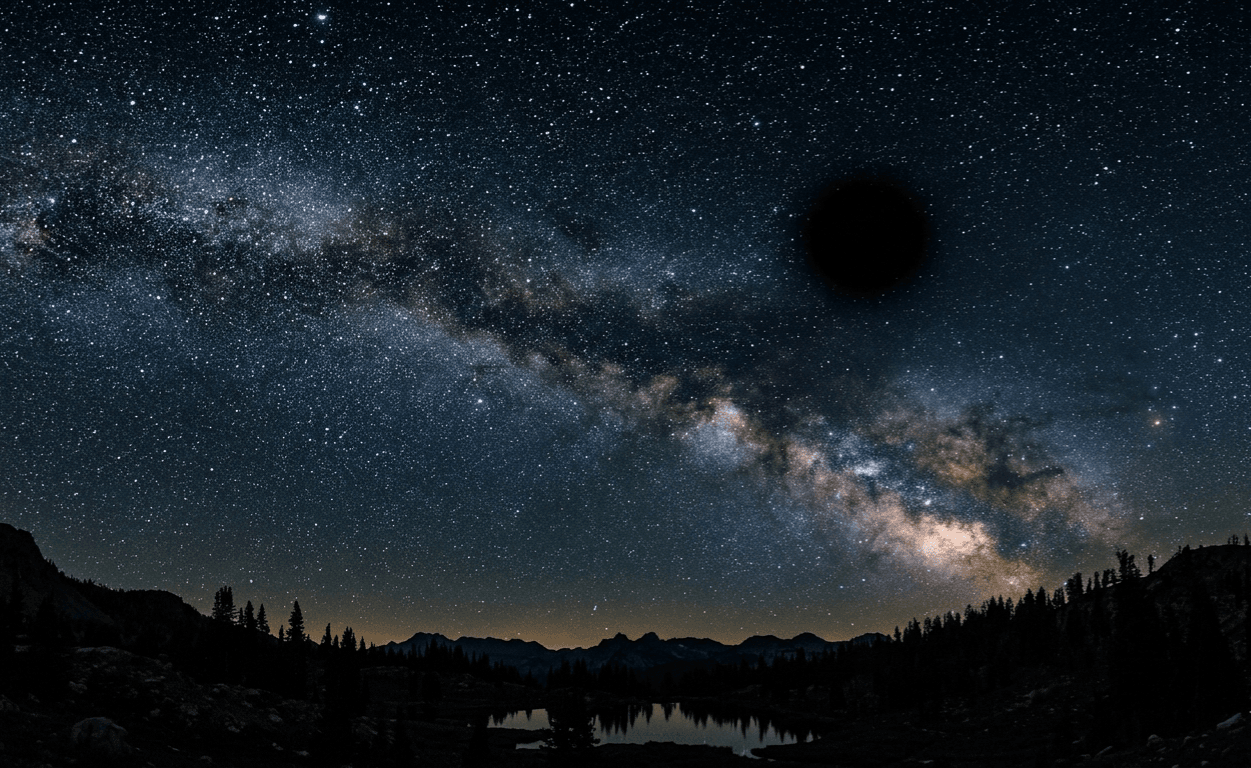
The day is the full rotation of the earth on its axis — evening to evening (Leviticus 23:32).
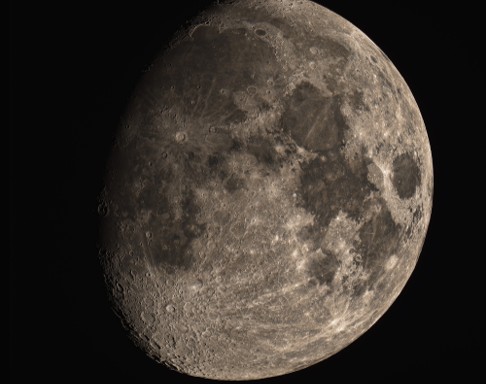
The month is the full orbit of the moon around the earth, crescent to crescent.

The year is the full orbit of the earth around the sun.
These are not arbitrary divisions. They are written into the structure of the physical world.
But there is a unit of time the heavens do not give us.
The week has no celestial anchor. No planet, no star, no observable physical cycle produces it. And yet it has persisted across cultures and calendar systems — Roman, Julian, Gregorian, Hebrew (see Why Does the Bible Have Two Calendars?) — with a consistency that is quietly remarkable. The day shifts. The month gets recalculated. The year gets reformatted. The week survives.
Where does it come from?
Thus the heavens and the earth, and all the host of them, were finished. And on the seventh day God ended His work which He had done, and He rested on the seventh day from all His work which He had done. Then God blessed the seventh day and sanctifiedFrom the Greek hagiasmos, rooted in hagios — the Greek rendering of the Hebrew qadosh: set apart, designated for a specific purpose. Not primarily a moral improvement process but a directional one: removed from common use and oriented toward something specific. Connects directly to ekklesia — the called-out ones. Synonyms: sanctify, sanctified, hagios, hagiasmos, holiness, qadosh. More it, because in it He rested from all His work which God had created and made. Genesis 2:1-3 NKJV
The week doesn’t come from the sky. It comes from God’s own process.
This is what tends to get overlooked. We focus on the Sabbath — the seventh day, the rest — and treat the six days of work as backdrop. But the fourth commandmentFrom the Hebrew Torah — instruction, direction — rooted in yarah, to aim as an archer toward a target. Never primarily legislative. The stone tablets were hidden inside the ark, inside the most holy place, mediated by a priest. The promise was always to move that instruction from stone to flesh — from concealment behind a veil to working from within the person. Synonyms: Torah, nomos, instruction, teaching, commandment, mitzvah. More doesn’t just establish the Sabbath; it establishes the full cycle:
Six days you shall labor and do all your work, but the seventh day is a sabbath to the Lord your God. On it you shall not do any work… For in six days the Lord made the heavens and the earth, the sea, and all that is in them, but he rested on the seventh day. Exodus 20:9-11 NIV
He’s not just telling Israel to rest. He’s telling them to see his process — six days of work, one day of rest, in the same pattern he used when he made the world. The week itself is the revelation. The Sabbath is the seal on it.
Notice the fourth day and the fourth commandment together. The fourth day of creation is when God focuses on the celestial reckoning of time. The fourth commandment focuses on God’s own reckoning of time — a weeklyThe cycles of day, month, and year we observe in the heavens — the earth's rotation, the moon's orbit, the earth's circuit around the sun. The week has no such anchor in the sky, yet we are instructed to observe it too — a complete cycle of seven culminating in the seventh, the same shape that surfaces everywhere in Scripture. Synonyms: shavua, cycle of seven. See also: Sabbatical year. See Where Does the Week Come From? More cycle that has no celestial source. One points to the heavens; the other points to something the heavens cannot give.
Say to the Israelites, “You must observeIn plain English, to observe means to see attentively — to give careful, focused attention to something. This is precisely what the Hebrew shamar points at: watchful, protective attention toward something valued. In religious usage, "observe" has been reduced to performing an external requirement. Synonyms: shamar, keep, watch, guard. More my SabbathsThe seventh day of the week, set apart for rest (Ex 20:8-11) — sunset Friday to sunset Saturday. Scripture also calls certain annual holy days "sabbaths" (Lev 23:24, 32, 39), which is why "the day after the Sabbath" (Lev 23:11) can be read two ways and the Wave Sheaf's timing is debated. The sabbath rest recurs by scale: the seventh day, the seventh year — the land's sabbath (Lev 25) — and the Jubilee that crowns seven of those. One pattern at every magnitude. Synonyms: Shabbat. See also: Sabbatical year, Jubilee. See Where Does the Week Come From? More. This will be a sign between me and you for the generations to come, so you may know that I am the Lord, who makes you holy.” Exodus 31:13 NIV
The sign is not merely the rest. It is the full cycle — the week as a revelation of who God is and how he works. The material creation is finished. The week continues. The Sabbath cycle marks an ongoing process.
That the week has survived so consistently, without a celestial body to anchor it, is worth sitting with. Every culture finds its own way to track the day, the month, the year. The week persists anyway. That constancy is not nothing.
Daniel sees something worth noting:
He will speak against the Most High and oppress his holy people and try to change the set times and the laws. Daniel 7:25 NIV
Changing the set times is usually read as altering the Sabbath day or the holy daysA holy day is a sabbath — a commanded day of rest and holiness. Scripture gives two kinds: the weekly Sabbath (the seventh day) and the annual sabbaths tied to the feasts (Lev 23:24, 32, 39). Both are holy days; neither is the same as a feast. An annual holy day is not the annual feast it belongs to. It is a point of demarcation in the sequence — a marker that gathers up the period leading to it and carries its meaning forward. Synonyms: sabbath, annual sabbath. More. It may include something more specific — the weekly cycle itself. A six-day week or a ten-day week would do more than inconvenience Sabbath-keepers. It would sever the connection between human time and God’s revealed process. Whether that happens is an open question. That the week is worth seeing is not.
See The Same Shape at Every Scale