The Same Shape at Every Scale
This follows from Where Does the Week Come From? — that post shows where the week comes from; this one follows the same cycle outward.
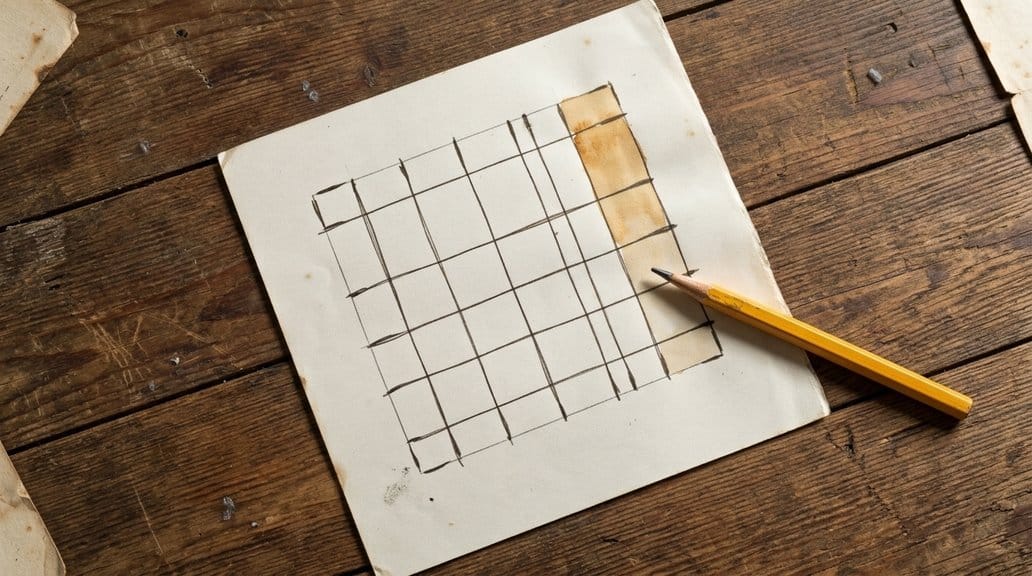
Start with something we handle without a second thought: a calendar. Here’s a simple one, laid out so the first day of the month falls on day one and the SabbathThe seventh day of the week, set apart for rest (Ex 20:8-11) — sunset Friday to sunset Saturday. Scripture also calls certain annual holy days "sabbaths" (Lev 23:24, 32, 39), which is why "the day after the Sabbath" (Lev 23:11) can be read two ways and the Wave Sheaf's timing is debated. The sabbath rest recurs by scale: the seventh day, the seventh year — the land's sabbath (Lev 25) — and the Jubilee that crowns seven of those. One pattern at every magnitude. Synonyms: Shabbat. See also: Sabbatical year, Jubilee. See Where Does the Week Come From? More on day seven. WatchIn plain English, to observe means to see attentively — to give careful, focused attention to something. This is precisely what the Hebrew shamar points at: watchful, protective attention toward something valued. In religious usage, "observe" has been reduced to performing an external requirement. Synonyms: shamar, keep, watch, guard. More what it does. A week ends — but time doesn’t. It runs straight on into the next week. The Sabbath always lands on a seven, or a multiple of seven: 7, 14, 21, 28. And the first day of the next week always lands on an eight — seven plus one, fourteen plus one. The grid doesn’t stop when the week does; it just keeps going. The actual dates shift from month to month, but the shape holds.
Hold onto that shape — six days and a seventh, completion and then a new beginning, repeating without a break. Scripture lays the same shape out at scales we hardly ever notice.
The first is a week of years. Six years you sow your fields and harvest; the seventh year the land rests (Leviticus 25:3-4). On that same seven-year count come the release of debts and the release of those in bondage (Deuteronomy 15) — all of it on one annual cycle. Draw it as a grid and it looks just like the calendar on the wall, only the cells are years instead of days and the seventh is a Sabbath year. Then it continues, the way the weeklyThe cycles of day, month, and year we observe in the heavens — the earth's rotation, the moon's orbit, the earth's circuit around the sun. The week has no such anchor in the sky, yet we are instructed to observe it too — a complete cycle of seven culminating in the seventh, the same shape that surfaces everywhere in Scripture. Synonyms: shavua, cycle of seven. See also: Sabbatical year. See Where Does the Week Come From? More grid does, right into the next seven.
Then Scripture stacks the pattern on itself. Count seven of those Sabbath years — seven sevens, forty-nine years — and on the Day of AtonementAn English construction — at-one-ment — coined by Tyndale, not a direct translation. The Hebrew behind it, kaphar, means to cover, sharing its root with kapporeth — the cover of the ark, the mercy seat. The Day of Atonement centers on the High Priest bringing blood to that cover. The act and the object are the same word pointing at the same reality. Synonyms: Day of Atonement, Yom Kippur, kaphar, kapporeth. More that closes the forty-ninth, the trumpet sounds and the fiftieth year is set apart: liberty proclaimed throughout the land, every person returning to their family and their own ground. The Jubilee (Leviticus 25:8-12).
Now notice what happens at the seam. Seven annual weeks, each closing in a Sabbath year — but the seventh one can’t simply take a Sabbath that runs seven years long. Who survives seven years without sowing? So instead of one long rest, two rest-years are set back to back: the forty-ninth is the ordinary Sabbath year that closes the seventh cycle, and the fiftieth — the Jubilee — comes right after it. Part of that is plainly practical. But the Jubilee is doing something more. Just as the weekly Sabbath defines and closes the week, this one holy year defines and closes the whole group of annual weeks — gathering them into a single unit and sealing it before the count begins again. The seventh completes; the fiftieth encapsulates.
Fifty years, though, is most of a lifetime. You might live through one Jubilee cycle and never quite catch the shape of it. So the same thing is given again — small enough to hold in view, and repeated often enough to actually grow familiar with. From the day after the Sabbath, when the wave sheafThe first of the firstfruits of the harvest — a single unleavened sheaf lifted and waved before God on the day after the Sabbath during the Days of Unleavened Bread. It marks the transition into the counting period of the Feast of Weeks. 1 Corinthians 15:20-23 identifies Christ as the first of the firstfruits of the resurrection — the wave sheaf pointing precisely at him. Synonyms: wave offering, firstfruits offering, omer. See The Feast of LEAVENED Bread More is lifted, count seven full weeks — forty-nine days — and the fiftieth day is PentecostThe fiftieth day — the annual holy day (a sabbath) that closes the Feast of Weeks, the culmination of its seven-week count. In Acts 2, the day the Spirit was poured out on the gathered ekklesia. The Greek pentēkostē simply means fiftieth. Pentecost is the holy day, not the feast itself — the feast is the seven weeks it completes. The connection between Pentecost and the eternal Jubilee cycle is explored in From Fifty Days to Eternity. Synonyms: pentēkostē. More (Leviticus 23:15-16). Lay it beside the Jubilee and the two are nearly identical: seven sevens, then a fiftieth that opens something new. There’s one difference, and it sits at the seam — the Feast of WeeksThe longest feast in the Leviticus 23 calendar — seven full weeks of counting from the wave sheaf to the fiftieth day, when it is closed by the holy day of Pentecost. Beginning with the unleavened first of the firstfruits and culminating in two leavened loaves offered as firstfruits. An alternative name for this feast is demonstrated by its contents: the Feast of Leavened Bread. Synonyms: Shavuot, Feast of Firstfruits, Feast of Harvest. More doesn’t open with a Pentecost the way the Jubilee opens with a Jubilee; the count and its fulfillment aren’t joined end to end. That difference isn’t a flaw. It’s there for a reason, and it’s worth sitting with. What the Jubilee spreads across a lifetime, the FeastIn Scripture a feast — Hebrew chag — is a designated period, not a single day but a span with its own structure and sequence. The Feast of Weeks spans seven weeks; the Feast of Tabernacles, seven days. A feast may contain one or more annual holy days, but the feast itself is the full period, not any single day within it. A feast is not the same as a holy day (a sabbath), though the two connect and can coincide — the Feast of Trumpets is itself a holy day, and Atonement is both a feast and a holy day. Synonyms: festival, appointed time, moed. More of Weeks lets us watch inside a single year.
And that opening difference may carry more than a calendar quirk. The Jubilee was kept by a whole people together — one count tracked across generations, each cycle chaining onto the last. The Feast of Weeks opens instead on a single first, the wave sheaf, with nothing before it. A people keepingFrom the Hebrew shamar — to watch over, guard, protect, give attentive care to. A shepherd shamar the flock. The keeping the feasts and sabbath requires is the attentive, protective engagement that creates the conditions for seeing what they reveal — not external compliance with a schedule. Synonyms: shamar, observe, guard, watch over. More time together; a lone first starting a fresh count. The corporate and the personal, set side by side in how the two cycles begin. It’s a real connection, and an undeveloped one.
If this is starting to feel theoretical and a little dry — layers and levels and cycles inside cycles — that’s all right. I’ll be honest: when I first worked through it I couldn’t keep it straight in my own head, especially the nuances, and I had to go back over it more than once. I always loved chemistry as a kid, but not the textbook part; the lab was where it came alive. This is the textbook part. The understandingIn the New Testament this is synesis — a bringing-together: scattered pieces drawn into one cohesive whole, not a quantity of information accumulated. In plain terms it is connecting the dots — understanding is unification, not accumulation. Synonyms: synesis, unification, insight, discernment See The Importance of Understanding in Jesus Christ More comes when we apply it — and we will. For now it’s enough to see that there are levels, one sitting inside another, joined in a particular way.
Two Grids, One Shape — The Difference Is the First Cell
| 1 | 2 | 3 | 4 | 5 | 6 | 7 · Sabbath | |
|---|---|---|---|---|---|---|---|
| Cycle 1 | Jubilee | 2 | 3 | 4 | 5 | 6 | 7 |
| Cycle 2 | 1 | 2 | 3 | 4 | 5 | 6 | 7 |
| Cycle 3 | 1 | 2 | 3 | 4 | 5 | 6 | 7 |
| Cycle 4 | 1 | 2 | 3 | 4 | 5 | 6 | 7 |
| Cycle 5 | 1 | 2 | 3 | 4 | 5 | 6 | 7 |
| Cycle 6 | 1 | 2 | 3 | 4 | 5 | 6 | 7 |
| Cycle 7 | 1 | 2 | 3 | 4 | 5 | 6 | 7 |
| 1 | 2 | 3 | 4 | 5 | 6 | 7 · Sabbath | |
|---|---|---|---|---|---|---|---|
| Week 1 | Wave Sheaf | 2 | 3 | 4 | 5 | 6 | 7 |
| Week 2 | 1 | 2 | 3 | 4 | 5 | 6 | 7 |
| Week 3 | 1 | 2 | 3 | 4 | 5 | 6 | 7 |
| Week 4 | 1 | 2 | 3 | 4 | 5 | 6 | 7 |
| Week 5 | 1 | 2 | 3 | 4 | 5 | 6 | 7 |
| Week 6 | 1 | 2 | 3 | 4 | 5 | 6 | 7 |
| Week 7 | 1 | 2 | 3 | 4 | 5 | 6 | 7 |
The same 7×7 grid both times — not a line, a field of weeks within weeks. The first cell is where they part. The Jubilee opens on the very Jubilee that closed the previous grid, so one grid runs straight into the next. The Feast of Weeks opens on the wave sheaf — a first with no grid before it.
| The Seven — the seventh completes and seals | The Eighth / Fiftieth — a new beginning | |||||||
|---|---|---|---|---|---|---|---|---|
| The Week days |
1 | 2 | 3 | 4 | 5 | 6 | 7 Sabbath |
8th day next week begins |
| The Sabbatical Cycle years |
1 | 2 | 3 | 4 | 5 | 6 | 7 land rests |
year 8 next cycle begins |
| The Jubilee 7 × 7 years |
cycle 1 | cycle 2 | cycle 3 | cycle 4 | cycle 5 | cycle 6 | cycle 7 yr 49 rests |
year 50 Jubilee — liberty, return |
| The Feast of Weeks 7 weeks of days |
week 1 | week 2 | week 3 | week 4 | week 5 | week 6 | week 7 day 49 |
day 50 Pentecost |
| The Millennial Week “a day as 1,000 yrs” |
1 | 2 | 3 | 4 | 5 | 6 | 7 the Millennium |
8th beyond |
The same seven-shape runs at every scale — the seventh completes, and the next unit opens a new beginning. At any moment you are inside several of these at once. (The dating of the millennial scale is set aside here; it is the pattern that matters, not the count.)
The same seven-shape runs at every scale — the seventh completes and seals, and the next unit opens a new beginning. Set the scales beside one another and the point is plain: it’s one shape. Days, years, sevens of years, weeks of days. There’s even a week the Scriptures point toward without nailing down — “with the Lord a day is like a thousand years” (2 Peter 3:8), a millennial week with its own seventh-day rest. The dating of these larger cycles is genuinely disputed; people count them differently and argue over where we stand. I’ve looked at a number of these reckonings myself and settled on one — but as an illustration, not a dogma to argue over. Set the dating aside. We don’t need an exact year. What matters is the pattern being shown, not a date pinned on it — and the pattern holds whether or not anyone agrees on the date.
Which means that at any given moment we are standing inside several of these at once: a day within the week, a year within the sabbatical cycle, that cycle within the Jubilee, and — if the pattern runs all the way up — a stretch within the millennial week. It’s the same thing we do without thinking every day, where a single date is at once a day of the week, a day of the month, a month of the year, and a year of the decade. Not one line of time. Several, nested, each turning at its own scale.
Notice what we just did. We didn’t follow an argument — we followed a set of directions and watched something take shape. That’s what these passages are: instructions. The kind that come with something you assemble yourself, except here the diagrams are wearing words on the surface. We read the words and think we’ve read the thing, when the words were given to be built and seen. Once we realize we’re holding assemblyThe English word "church" doesn't translate the Greek ekklesia — it derives from kyriakos, a pagan term for a building belonging to a lord. Ekklesia is a called-out, gathered people; the New Testament rarely leaves it bare but qualifies it — "the church of God" (whose it is, who called it) or "the church at Corinth" (which local gathering) — never a building. The Septuagint already used it for Israel's qahal, the congregation God called out and assembled (Acts 7:38). A spiritual organism, not an institution. Synonyms: ekklesia, ecclesia, called-out ones, assembly, congregation, kyriakos, qahal, edah.
See also: firstfruits. See A People, Not a Place More instructions and not a lecture, it reads differently — and we start to suspect that not one of the steps, not even the small ones, is there by accident.
The Sabbath and the week can’t be separated; you don’t have one without the other. The seventh isn’t just a day set down at the end — it completes the seven and seals it: a container, a point of demarcation that says this much belongs together. Seven for completeness; the eighth for a new beginning. And the layers — weeks, years, JubileesThe fiftieth year, reached after seven sabbatical cycles of seven years and announced by a ram's-horn blast — the year when debts were released, the enslaved set free, and every family's land returned to it. It runs on the same seven-times-seven-into-fifty structure as the Feast of Weeks, on a higher scale: the pattern of seven resolving into liberty and return. Synonyms: yobel, year of release, year of liberty. See also Sabbatical year. See From Fifty Days to Eternity More, the millennia — overlap and connect in specific ways, one folded inside another, octaves of the one shape. That structure, the way the cycles contain each other, is what I keep calling the framework of the framework: the larger thing the familiar pieces were sitting inside of all along. (See The Biblical Principle of Cycles Within Cycles)
And yet, so far, these are only containers of time. Days, years, cycles — empty grids. What fills them is another matter altogether, because the weeks aren’t merely markers on a calendar. The weeks contain processes. But those are subjects of their own, each to be taken up in its place.


I love what you’re doing. Have you ever studied the Mayan cycles.
Thanx, again, Juanita. I’ve come across them over the years but never pursued it — I’ve read fairly broadly, and there are real parallels running through a lot of the old cultures. Some of it is interesting, sometimes even fascinating. What I try not to do is mix systems, though. Each has its own language, and blending them muddles both. It’s also what keeps the checking honest: we can’t test whether something agrees with itself while bringing in pieces from somewhere else.