He Kept Reaching
The leper wasn’t the only one. Again and again Jesus crossed the line the law drew around the unclean — the leper, the bleeding woman, the dead — and every time, it was the uncleanness that gave way, not him.

The leper wasn’t the only one. Again and again Jesus crossed the line the law drew around the unclean — the leper, the bleeding woman, the dead — and every time, it was the uncleanness that gave way, not him.
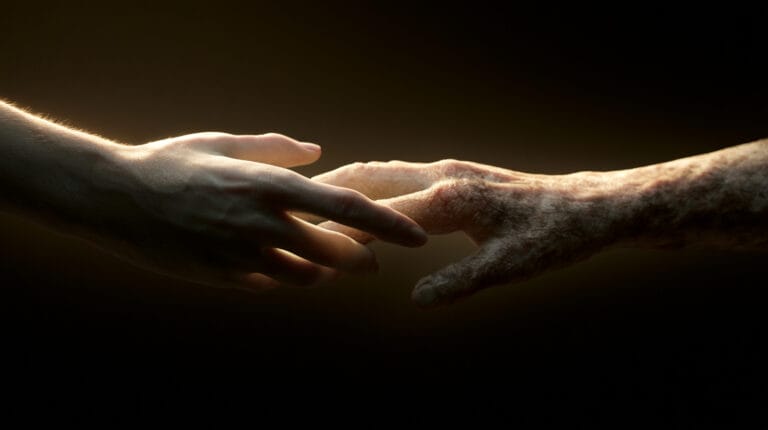
A leper begs to be made clean — and instead of healing him from a safe distance, Jesus reaches out and touches the untouchable. That one choice quietly overturns a word most of us were sure we understood.

Words are only one of the languages we speak. A look at symbolism as the bridge between words and reality — and at one symbol, death, sounding the same note at every level, from a garden to the Holy of Holies.

Before the tree, Judas went back to the temple — and the men who held the key of knowledge handed him a wall instead of a door. A look at the key that opens or locks, and whose hand finally holds it.

I catch myself reaching for the verse, the correction — the thing I know that they apparently don’t. A look at the danger Paul names: knowledge puffs up, but love builds up.

Close one eye and the room goes flat. Reading and study are the two eyes we bring to the Bible — and the depth is in the two together, not in either alone.

To “observe” the commandments has quietly come to mean perform them. But the word means to watch — to see. That single shift is the difference between a mask and a mirror.

Why is it called the tree of the knowledge of good and evil — and not, simply, the tree of death? Two trees at the center of the garden, and their names don’t match the way you’d expect.

You can know a voice on the phone before a single word means anything. What if Scripture could be heard the same way?
Concordances and lexicons: the right tool for one job, the wrong tool for another. One Greek word — epithumia, rendered both “desire” and “lust” — shows why.