What He Was Willing to Touch
A leperThe "leprosy" of Leviticus (Hebrew tzaraat) is not the modern disease but a range of surface conditions — on skin, cloth, even the walls of a house — and the most severe of the uncleannesses, spoken of as a kind of living death (Num 12:12). Unlike most defilements it had no wash-and-wait cure; the leper had to be pronounced clean rather than scrub himself clean (Lev 14). See also: What He Was Willing to Touch. More comes to Jesus. Before we watchIn plain English, to observe means to see attentively — to give careful, focused attention to something. This is precisely what the Hebrew shamar points at: watchful, protective attention toward something valued. In religious usage, "observe" has been reduced to performing an external requirement. Synonyms: shamar, keep, watch, guard. More what he does, we have to feel what that meant.
A leper was the most untouchable person alive — not merely sick, but unclean: put outside the camp, clothes torn, made to cover his lip and cry “Unclean, unclean” so no one would come near (Leviticus 13:45-46). You did not touch a leper. To touch one was to draw his uncleannessIn Leviticus, unclean (Hebrew tame') names a state of ritual impurity, not a moral fault — its usual causes are the body's own processes (birth, illness, discharge, contact with death), and it is never listed among the sins (Lev 16:16). Its remedy is washing and waiting — purification, not forgiveness (Lev 15:31). See also: What He Was Willing to Touch. More onto yourself.
The leper kneels before Jesus and says, “If you are willing, you can make me clean.”
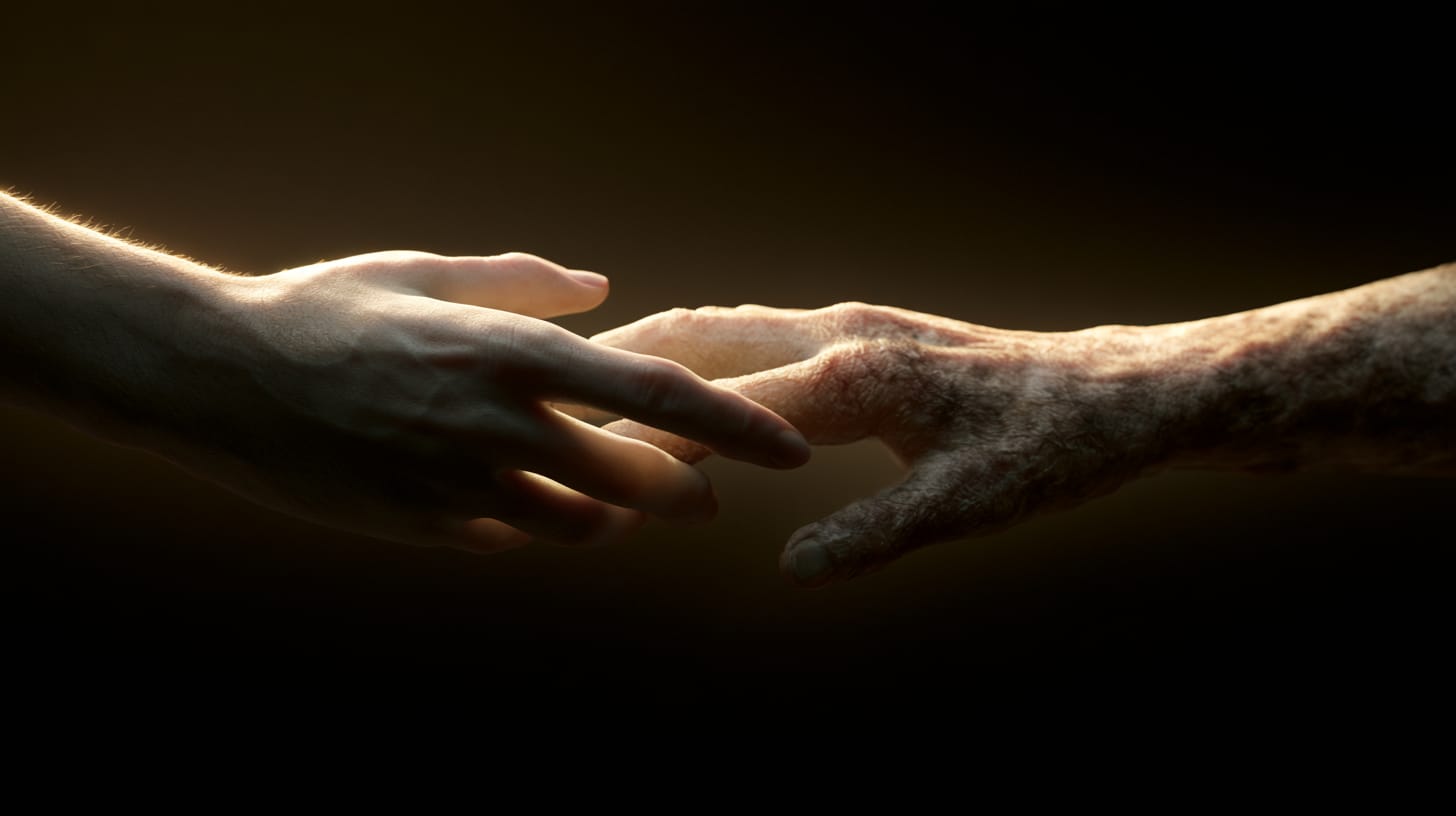
And here is the line to slow down on. Jesus could have healed him with a word — he did exactly that for others, across a distance, with nothing but a sentence. He didn’t need to come within a mile of the man. Instead: “Jesus put out his hand and touched him” (Matthew 8:3). He reached across the one line everyone else drew, and laid his hand on the untouchable.
We read past it as kindness. It is kindness — and it is more than that. It is a choice, and a strange one, if “unclean” is what most of us were taught it is.
I kept the dietary restrictions for years. I’m not here to take them from anyone — but something in me always suspected they carried more than a list of forbidden things. Watch the collision, and you’ll feel why: the one man who ever lived without sin reaches out, on purpose, and takes hold of the unclean. If touching the unclean were sin, he just sinned. He didn’t — he never did. So whatever “unclean” is, it cannot be another word for sin. He showed us that with his hand, before anyone could argue it.
So what is it, then — this thing that isn’t sin?
Start with how the lawFrom the Hebrew Torah — instruction, direction — rooted in yarah, to aim as an archer toward a target. Never primarily legislative. The stone tablets were hidden inside the ark, inside the most holy place, mediated by a priest. The promise was always to move that instruction from stone to flesh — from concealment behind a veil to working from within the person. Synonyms: Torah, nomos, instruction, teaching, commandment, mitzvah. More itself talks. On the Day of AtonementAn English construction — at-one-ment — coined by Tyndale, not a direct translation. The Hebrew behind it, kaphar, means to cover, sharing its root with kapporeth — the cover of the ark, the mercy seat. The Day of Atonement centers on the High Priest bringing blood to that cover. The act and the object are the same word pointing at the same reality. Synonyms: Day of Atonement, Yom Kippur, kaphar, kapporeth. More the high priest makes atonement for the sanctuary “because of the uncleannesses of the people of Israel and because of their transgressions, all their sins” (Leviticus 16:16, ESV). Uncleanness is the first thing named — and it stands on its own, beside sin but never as a kind of sin. Two different troubles, listed side by side.
And look at what made a person unclean. A woman who has just given birth is unclean (Leviticus 12) — and no one imagines that bearing a child is a sin. Touching a dead body makes you unclean (Numbers 19) — even when the body is your own father’s and burying him is the duty laid on you. Uncleanness falls on people who have done nothing wrong, and sometimes on people doing exactly what they should. It is not a verdict on your conduct. It is a condition you are in.
That is why its remedy was never forgiveness. You do not forgive childbirth. No one repents of touching a corpse. The unclean were not pardoned — they were washed: water, time, waiting, cleansing. A different problem asks a different cure, and Scripture never mixes the two up.
Go back to the leper and you’ll hear him keepFrom the Hebrew shamar — to watch over, guard, protect, give attentive care to. A shepherd shamar the flock. The keeping the feasts and sabbath requires is the attentive, protective engagement that creates the conditions for seeing what they reveal — not external compliance with a schedule. Synonyms: shamar, observe, guard, watch over. More the categories straight himself. He doesn’t say “forgive me.” He says, “make me clean.” And Jesus answers in kind — not “your sins are forgiven,” but “Be clean” (Matthew 8:3). Neither of them confuses the two. The leper surely carried sins, as we all do — but that was never what made him unclean. His uncleanness was a condition, not a wrong, and he had found the one person who could do something about it.
Which leaves us holding two questions, and they are the doors into everything after this. If “unclean” is never sin — never the thing that puts us in the wrong with God — then what is it? What is this whole vast category the law spent chapter after chapter mapping out? And why did the one man who never needed cleansing walk straight into it on purpose — and come away not defiled, but with the leper clean?
We were handed “unclean” as a verdict. He reached out and made a man clean. The distance between the two is where the rest of this waits.
Further study: Mark 5:25–34 · Mark 5:35–43 · Luke 7:11–15


If I cry ‘uncle’ will you answer what IS unclean?? What we think about that is not holy in His eyes? HE can look past all the crap within us & bring us to Him?
Covering the clean and unclean will require quite a number of posts. Maybe about another 5-6 posts.