What the Floor Teaches
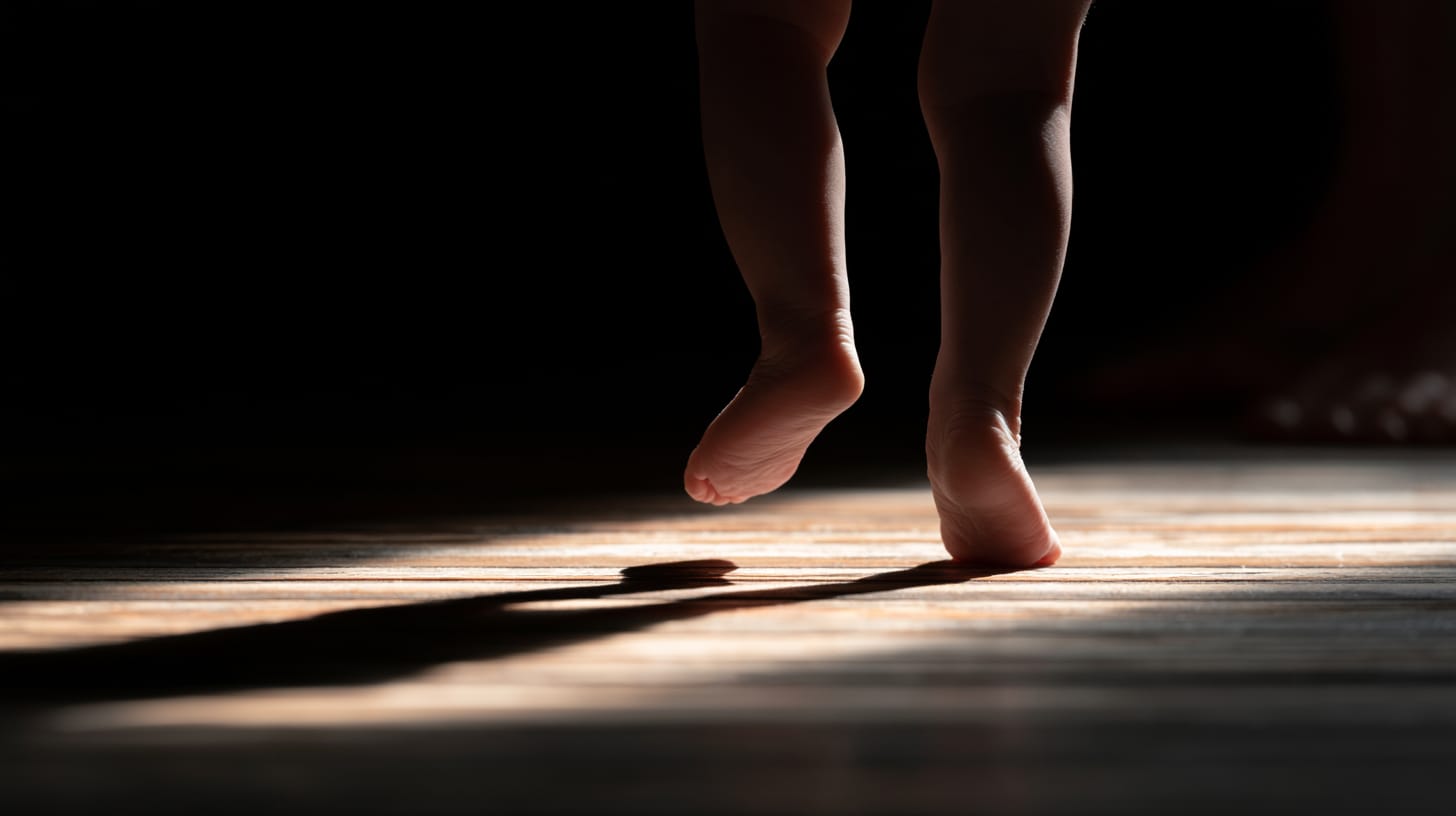
WatchIn plain English, to observe means to see attentively — to give careful, focused attention to something. This is precisely what the Hebrew shamar points at: watchful, protective attention toward something valued. In religious usage, "observe" has been reduced to performing an external requirement. Synonyms: shamar, keep, watch, guard. More a child learning to walk. She pulls herself up on the edge of the couch, stands swaying for a second, lets go — and drops straight back down. She does it again. And again. She isn’t embarrassed. She doesn’t decide, after the fourth fall, that walking isn’t for her. She isn’t keepingFrom the Hebrew shamar — to watch over, guard, protect, give attentive care to. A shepherd shamar the flock. The keeping the feasts and sabbath requires is the attentive, protective engagement that creates the conditions for seeing what they reveal — not external compliance with a schedule. Synonyms: shamar, observe, guard, watch over. More score, and the people around her aren’t keeping score either — nobody scolds a baby for falling; they cheer the step and put out a hand for the next one. The falling isn’t going wrong. The falling is how it’s done.
We say “practice” and usually mean something else. In churchspeakReligious vocabulary so overused across so many traditions that it no longer points reliably at anything. Words like "saved," "grace," and "repentance" still circulate widely but carry different meanings in different mouths — creating the appearance of shared understanding where little exists. More it slides toward practice what you preach — get it right, line your living up with your words, perform it without slipping. But that was never what practice meant. The baby has it right: you learn a thing by doing it badly, over and over, until the doing teaches you what no amount of being told ever could. Mistakes aren’t the breakdown of practice. They are practice.
That’s the part we keep forgetting about ourselves. No switch gets thrown that makes us suddenly walk. There’s no morning we wake up finished. Whatever this life in ChristNot a surname but a title: the Greek Christos, rendering the Hebrew Mashiach (Messiah) — "the Anointed." The anointing that set apart Israel's kings, priests, and prophets all converges on the one person it was pointing to. Synonyms: Messiah, Anointed, the Anointed One, Mashiach, Christos. See also: Logos More is, it comes the way walking comes to a toddler — by doing it, falling, and getting up, for a long time.
And here’s what the falling is actually for. There’s one thing that can’t be handed to us finished, can’t be granted on request or decided into place: humility. We don’t get it by being told to. It’s learned the hard way, on the floor, just after we were sure we had our balance. Which means the falls aren’t the failure of the process — they’re the curriculum. Pride is what trips us; the fall is what teaches. Pride goeth before a fall, yes — but the fall is also the cure for the pride. Someone who never went down would never come by the one thing that matters most.
So what kind of God stands over that? Not, it turns out, one keeping a tally of stumbles. Watch the parent with the toddler again: they don’t berate the fall, they steady it — a hand, a word, there for the next try. Scripture puts God in exactly that posture. “I taught Ephraim also to go,” he says, “taking them by their arms” (Hosea 11:3) — the parent teachingFrom the Hebrew Torah — instruction, direction — rooted in yarah, to aim as an archer toward a target. Never primarily legislative. The stone tablets were hidden inside the ark, inside the most holy place, mediated by a priest. The promise was always to move that instruction from stone to flesh — from concealment behind a veil to working from within the person. Synonyms: Torah, nomos, instruction, teaching, commandment, mitzvah. More the child to walk. “Though he fall, he shall not be utterly cast down: for the LORD upholdeth him with his hand” (Psalm 37:24). The hand isn’t there to catch you doing wrong. It’s there to steady the walk.
If we want the whole of it in one man, watch Peter. He starts with the boast — “though all shall be offended, yet will not I” — the toddler sure he’s already walking. Then the fall, and not a small one: he denies ever knowing him, three times, and weeps. By every score, he’s finished. And he isn’t finished. “Feed my sheep,” is what he hears (John 21) — put back on his feet and pointed forward. The man who couldn’t stand becomes the one who steadies others. The disciple we’re tempted to set on a pedestal got there by falling, and being lifted.
None of this is permission to stop caring when we go down — the baby who shrugs and quits never walks either. The falls are real; some of them hurt. But there’s a difference between the ache of a fall that’s teaching us something and the despair that says we never should have been on the floor at all. The first keeps us walking. The second keeps us down.
So maybe the question isn’t whether we’ll fall. We will, and often. Maybe it’s what we take the falling to mean. A verdict — or a step?