Simple Lessons From Highlights Magazine
UnderstandingIn the New Testament this is synesis — a bringing-together: scattered pieces drawn into one cohesive whole, not a quantity of information accumulated. In plain terms it is connecting the dots — understanding is unification, not accumulation. Synonyms: synesis, unification, insight, discernment See The Importance of Understanding in Jesus Christ More is simple enough for a child. Genuinely simple — not simplified, not dumbed down, but the kind of simple that a child walks into naturally and most adults have been trained out of. Two things children have that tend to disappear with age: humility (they don’t already think they know everything) and questions (they ask constantly, without embarrassment, about everything they don’t understand). Add to that a third thing — learning is fun, not a performance — and you have the posture that actually works. “Unless you turn and become like children, you will never enter the kingdom of heaven” (Matthew 18:3) isn’t a metaphor. It describes a way of approaching the material.
The complexity that makes Scripture seem impenetrable isn’t in the text. It’s in us — in the scattered, pulled-in-every-direction minds we bring to it. The truth is there. The posture is what unlocks it.
Highlights Magazine spent decades teachingFrom the Hebrew Torah — instruction, direction — rooted in yarah, to aim as an archer toward a target. Never primarily legislative. The stone tablets were hidden inside the ark, inside the most holy place, mediated by a priest. The promise was always to move that instruction from stone to flesh — from concealment behind a veil to working from within the person. Synonyms: Torah, nomos, instruction, teaching, commandment, mitzvah. More children to read carefully, notice details, and look for what others missed. The games in it turn out to be a surprisingly accurate description of what Scripture asks us to do.
Connect the Dots
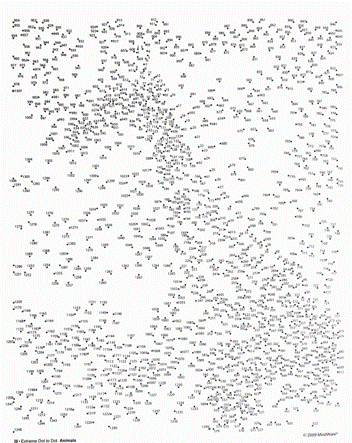
A connect-the-dots puzzle with a thousand points looks overwhelming. But the method is simple: start at number one and keepFrom the Hebrew shamar — to watch over, guard, protect, give attentive care to. A shepherd shamar the flock. The keeping the feasts and sabbath requires is the attentive, protective engagement that creates the conditions for seeing what they reveal — not external compliance with a schedule. Synonyms: shamar, observe, guard, watch over. More going. The dots connect themselves once you know where to begin.
Where do we start with Scripture? Paul already answered it:
For I decided to know nothing among you except Jesus ChristNot a surname but a title: the Greek Christos, rendering the Hebrew Mashiach (Messiah) — "the Anointed." The anointing that set apart Israel's kings, priests, and prophets all converges on the one person it was pointing to. Synonyms: Messiah, Anointed, the Anointed One, Mashiach, Christos. See also: Logos More and him crucified. — 1 Corinthians 2:2 ESV
The feastsIn Scripture a feast — Hebrew chag — is a designated period, not a single day but a span with its own structure and sequence. The Feast of Weeks spans seven weeks; the Feast of Tabernacles, seven days. A feast may contain one or more annual holy days, but the feast itself is the full period, not any single day within it. A feast is not the same as a holy day (a sabbath), though the two connect and can coincide — the Feast of Trumpets is itself a holy day, and Atonement is both a feast and a holy day. Synonyms: festival, appointed time, moed. More begin with PassoverThe LORD's Passover, kept on Nisan 14 (Lev 23:5): the lamb slain and its blood marking the houses spared in Egypt (Ex 12). The New Testament presents Christ as the Passover lamb (1 Cor 5:7), making it the opening act of the feast year. Synonyms: Pesach. See Was the Passover a Sin Offering? — at the Cross More. Passover in the New Covenant is the cross. That’s number one. Start there, and the picture begins to emerge. Start somewhere else and it never quite resolves. The dots aren’t the problem. The starting point is. (See also 1 Corinthians 1:18–2:1; Galatians 6:14.)
Which of These Is Not Like the Others?

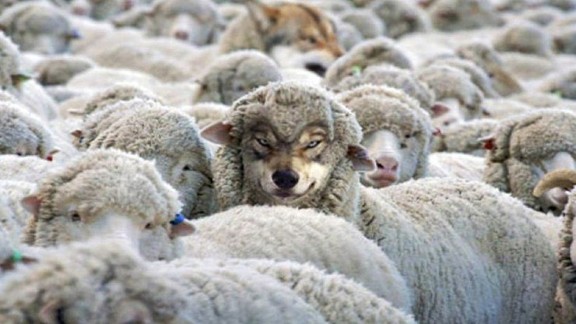
Discernment isn’t only about telling good from evil. That’s the obvious part — a penguin in a lineup of other birds is easy to spot. But discernment cuts deeper than black and white. It includes recognizing the proper place, proper role, and proper time of things that are genuinely good. We can take a good thing and put it in the wrong order, or apply it at the wrong stage of a process, and the result is confusion — not because anything was wrong in itself, but because the sequence matters.
God’s feasts are laid out in order for a reason. Not only was there a sequence for ancient Israel, and a sequence in Christ’s fulfillment — his life, death, and resurrection, and the establishment of the ekklesiaThe English word "church" doesn't translate the Greek ekklesia — it derives from kyriakos, a pagan term for a building belonging to a lord. Ekklesia is a called-out, gathered people; the New Testament rarely leaves it bare but qualifies it — "the church of God" (whose it is, who called it) or "the church at Corinth" (which local gathering) — never a building. The Septuagint already used it for Israel's qahal, the congregation God called out and assembled (Acts 7:38). A spiritual organism, not an institution. Synonyms: ekklesia, ecclesia, called-out ones, assembly, congregation, kyriakos, qahal, edah.
See also: firstfruits. See A People, Not a Place More — there is a personal sequence running through each of our lives. Attempt things out of order, even good things, and the process gets hindered. Not forcing a different sequence allows the process to work.
(Discernment references: 1 Corinthians 2:14; Luke 1:29; Proverbs 14:8; Romans 12:2; Hebrews 5:14; 1 Kings 3:9-12.)
Spot the Differences

Two pictures side by side, nearly identical, with real differences hidden in the similarity. The exercise trains the eye to look past the obvious resemblance and find what actually changed.
In speaking of a new covenant, he makes the first one obsolete. And what is becoming obsolete and growing old is ready to vanish away. — Hebrews 8:13 ESV
Do we actually understand what makes the Old Covenant old and the New Covenant new? Why the change — if the New is better, why wasn’t it given first? What are the real differences, not just the labels? These aren’t rhetorical questions. They are the kind of questions the exercise requires. (See also 2 Corinthians 3:14; Hebrews 8:6.)
What’s Wrong With This Picture?
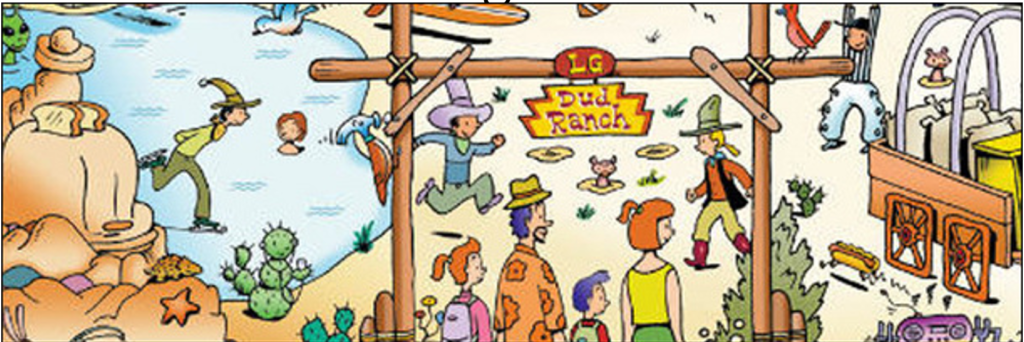
Something in the picture doesn’t fit. Finding it requires looking past what seems normal and noticing what actually jars.
When the wine ran out, the mother of Jesus said to him, “They have no wine.” And Jesus said to her, “Woman, what does this have to do with me? My hour has not yet come.” His mother said to the servants, “Do whatever he tells you.” — John 2:3-5 ESV
Did you feel it? His mother comes to him; he addresses her as woman. That’s the Greek word the text uses — not mother, not any term of familial address. And then: “My hour has not yet come” — and yet he does it. He changes the water into wine.
“Everyone serves the good wine first, and when people have drunk freely, then the poor wine. But you have kept the good wine until now.” — John 2:10 ESV
There is so much in this miracle it will need its own post (see An Entire Message). But the point here is simpler: the apparent inconsistencies and contradictions throughout Scripture are not problems to smooth over. They are flags. Alarms. Big neon signs(Greek sēmeion) — a miracle told less for its power than for what it signifies; the word points at meaning, not spectacle. John builds his gospel on them — numbering them and saying he wrote them down so we might see and believe (John 20:30-31). Synonyms: sēmeion, signs. See An Entire Message More. They are there to catch our attention and tell us something is worth looking at more closely. When we do look — when we hold the tension and keep asking — the apparent inconsistency doesn’t stand. It resolves into something we couldn’t have seen if we’d read past it.
The inconsistencies in our own thinking do the same work. When we hold two beliefs that contradict each other, that tension isn’t a failure — it’s a clue. Something needs reconciling, and the effort of reconciling it is how the picture sharpens.
Where Is Jesus Christ?
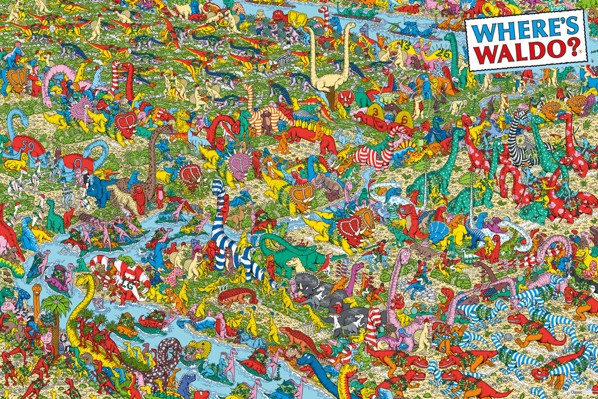
Where’s Waldo hides the same figure in every picture and asks you to find him. The skill is in learning to recognize what you’re looking for.
“Was it not necessary that the Christ should suffer these things and enter into his glory?” And beginning with Moses and all the Prophets, he interpreted to them in all the Scriptures the things concerning himself. — Luke 24:25-27 ESV
You search the Scriptures because you think that in them you have eternal life; and it is they that bear witness about me, yet you refuse to come to me that you may have life. — John 5:39-40 ESV
He is in all the Scriptures. All of them. Not as a few proof texts quoted from the back pages, but as the one the whole text is pointing toward. The question isn’t whether he’s there — he said he is, and he walked two disciples through the whole of Moses and the Prophets to show them. The question is whether we’re looking.
It is the glory of God to conceal things, but the glory of kings is to search things out.
Proverbs 25:2 ESV
Word Search
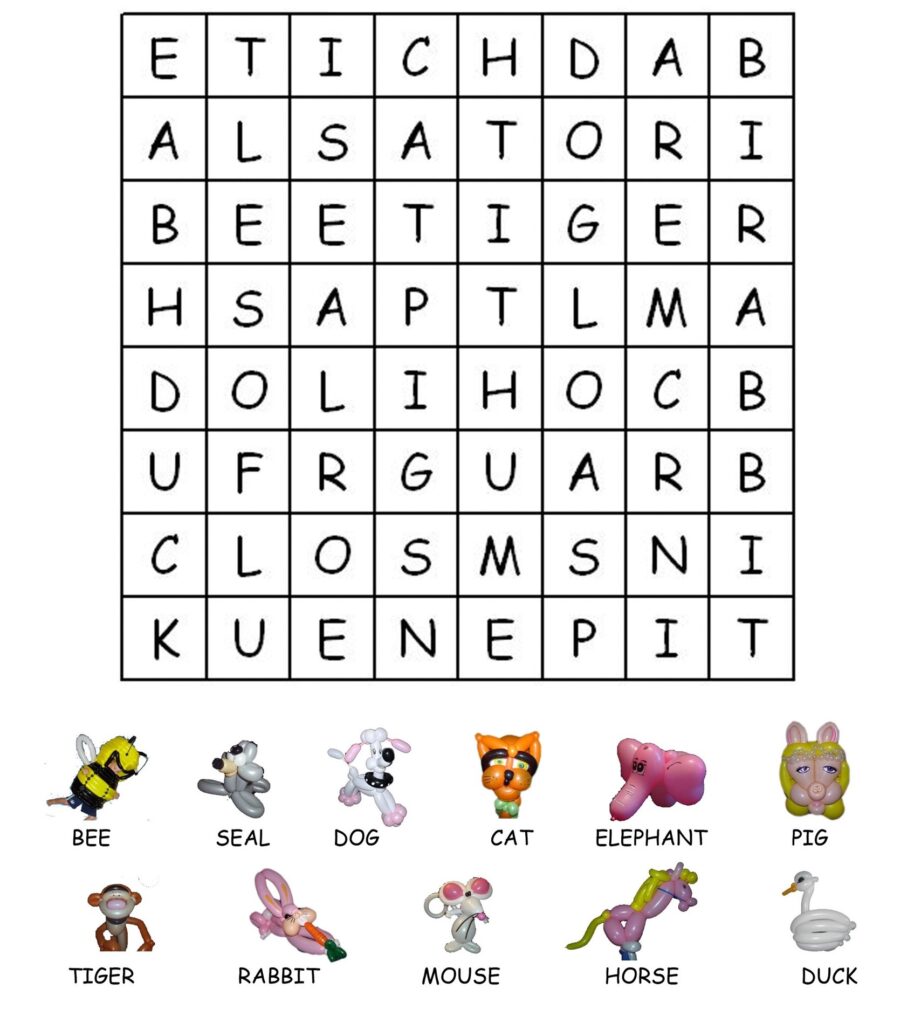
A word search asks you to find words hidden in a grid — but it also trains you to look for patterns, shapes, and connections that aren’t immediately obvious. Scripture has its own version of this: a visual language running through the text that words alone don’t carry.
The tabernacle and its furnishings — the curtain, the ark, the mercy seat, the lampstand, the altar of incense — are symbols. The ceremonial feast system — bread, wine, the unleavened loaf, the lamb, the goat, the various offerings — are symbols. They mean something that a picture carries and a definition alone never fully captures. Learning to read them is learning to read Scripture in the dimension it was designed for. Words point at the picture; the picture is what teaches.
There is a lot more to say here, and we’ll get into it. But the starting posture is what Highlights was teaching all along: look carefully, ask questions, follow the numbers, notice what doesn’t fit, and keep looking until the picture shows up. The picture is there. It always was.

I am relating to what you’re saying. I’m sure I’m not getting all but a great deal. Thank you
Juanita, it is so good to see you here. Thanx for coming! When I first “met” you through your Two Trees post, I wondered if maybe we could relate. Us old souls still need to be child like. You’re welcome.